Computational thinking and life skills

Surfing the Roku box last night I landed on the MIT Open CourseWare channel and sampled Introduction to Computer Science and Programming. In one lecture Prof. John Guttag offers this timely reminder:

Focus on understanding why the program is doing what it’s doing, rather than why it’s not doing what you wanted it to.

It was timely because I was, in fact, writing a program that wasn’t doing what I expected. And I had, in fact, fallen into the psychological trap that Guttman warns about. When you’re writing software you use abstractions and also create them. What’s more, many of the abstractions you use are the very ones you created. When you live a world of your own invention you can do amazing and wonderful things. But you can also do ridiculous and stupid things. To see the difference between them you must always be prepared to park your ego and consider the latter possibility.

Elsewhere in that lecture, Prof. Guttman talks about Jeanette Wing’s idea that computational thinking involves skills that transcend the computer and information sciences. In 2008, when that lecture was given, many of us were talking about how that might be true. We talked about computational thinking as a “Fourth R” — a cognitive tool as fundamental as Reading, Riting, and Rithmetic.

I never found an example that would resonate broadly. But maybe this will:

Focus on understanding why your spouse or child or friend or political adversary is doing what he or she is doing, rather than why he or she is not doing what you wanted him or her to.

Why I subscribe to the Ann Arbor Chronicle

The Ann Arbor city council met, most recently, on October 15. Why didn’t the Ann Arbor Chronicle’s story on the meeting land until October 24? It took a while for Dave Askins to compile his typically epic 15000-word blog post. It’s an astonishingly detailed record of the meeting — more and better coverage, perhaps, than is available in any city.

The Chronicle describes itself thusly:

Launched in September 2008, the Ann Arbor Chronicle is an online newspaper that focuses on civic affairs and local government coverage. Although we’d likely be classified by most folks as “new media,” in many ways we embrace an ethos that runs contrary to current trends: Longer, in-depth articles; an emphasis on factual accuracy and thoroughness, not speed; and an assumption that our readers are thoughtful, intelligent and engaged in this community.

Who will read 15,000 words on a city council meeting? That depends partly on when the reading occurs. Because while the Chronicle is a newspaper, it is also a living history of the town’s public affairs. There’s no paywall. Every story is, and remains, fully available. That means the Chronicle isn’t just on the web, it is a web. What was said and decided about transportation in October 2012 can be reviewed in 2013 or 2014. The Chronicle is a community memory. In the short term it delivers news. Over the long run it assembles context.

Consider the list of links, below, that I extracted from the October 24 report. Of the 53 links, 23 point to prior Chronicle stories. Paywalled journalism can’t do that, and it’s a crippling limitation. If those who cannot remember the past are condemned to repeat it, mainstream journalism’s online amnesia won’t help move us forward. What happened today is only the tip of the iceberg. We need to know how we got to today. That can’t happen in print. It can only happen online. But tragically it almost never does, so context suffers.

If you scan that list of links you’ll notice something else that mainstream online journalism seldom allows: external links. The majority of the links in the Chronicle’s report point to other sources. Some are the websites of local organizations or local government. Others are documents that weren’t online but have been placed into the public record by the Chronicle. Paywalled journalism rarely does this. Once you’re in it wants to keep you in to rack up pageviews. This is another context killer.

Who will pay for all this luxurious context? Well, there’s me. I don’t live in Ann Arbor. But I went to school there, my daughter does now, I have another connection to the town, and I’m a huge fan of Dave Askins’ and Mary Morgan’s bold venture. So I’m a voluntary subscriber. And I hope I’ll get the chance to support something like the Chronicle in the town where I do live.

As a refugee from the pageview mills I can tell you that model leads nowhere good. I’m ready, willing, and able to back alternatives that use the web as it was meant to be used.


Links extracted from the Ann Arbor Chronicle’s report on the city council meeting of October 15, 2012.

  1. http://a2dda.org/current_projects/a2p5_/
  2. http://alphahouse-ihn.org/
  3. http://annarborchronicle.com/2010/03/03/to-do-bicycle-registry-transit-station/
  4. http://annarborchronicle.com/2010/03/10/county-offers-400k-match-for-skatepark/
  5. http://annarborchronicle.com/2010/04/05/ann-arbor-planning-priorities-take-shape/
  6. http://annarborchronicle.com/2011/03/24/ann-arbor-gives-initial-ok-to-pot-licenses/
  7. http://annarborchronicle.com/2012/02/10/um-ann-arbor-halt-fuller-road-project/
  8. http://annarborchronicle.com/2012/05/13/public-art-rehashed-by-ann-arbor-council/
  9. http://annarborchronicle.com/2012/06/04/ann-arbor-rail-study-moves-ahead/
  10. http://annarborchronicle.com/2012/06/11/city-council-action-focuses-on-transit-topics/
  11. http://annarborchronicle.com/2012/07/19/um-wall-street-parking-moves-ahead/
  12. http://annarborchronicle.com/2012/08/09/city-council-votes-down-park-amendment/
  13. http://annarborchronicle.com/2012/08/14/um-ann-arbor-agree-rail-costs-not-owed/
  14. http://annarborchronicle.com/2012/08/16/council-meeting-floods-fires-demolition/
  15. http://annarborchronicle.com/2012/08/20/planning-group-briefed-on-william-st-project/
  16. http://annarborchronicle.com/2012/09/01/city-council-to-focus-on-land-sale-policy/
  17. http://annarborchronicle.com/2012/09/07/aata-5-year-program-may-2013-tax-vote/
  18. http://annarborchronicle.com/2012/09/09/ann-arbor-dda-board-addresses-housing/
  19. http://annarborchronicle.com/2012/09/10/zoning-transit-focus-of-council-meeting/
  20. http://annarborchronicle.com/2012/09/13/county-tax-hike-for-economic-development/
  21. http://annarborchronicle.com/2012/09/24/council-punts-on-several-agenda-items/
  22. http://annarborchronicle.com/2012/09/27/transit-contract-contingent-on-local-money/
  23. http://annarborchronicle.com/2012/10/11/dda-green-lights-housing-transportation/
  24. http://annarborchronicle.com/2012/10/12/council-may-seek-voter-ok-on-rail-station/
  25. http://annarborchronicle.com/2012/10/12/positions-open-new-transit-authority-board/
  26. http://annarborchronicle.com/events-listing/
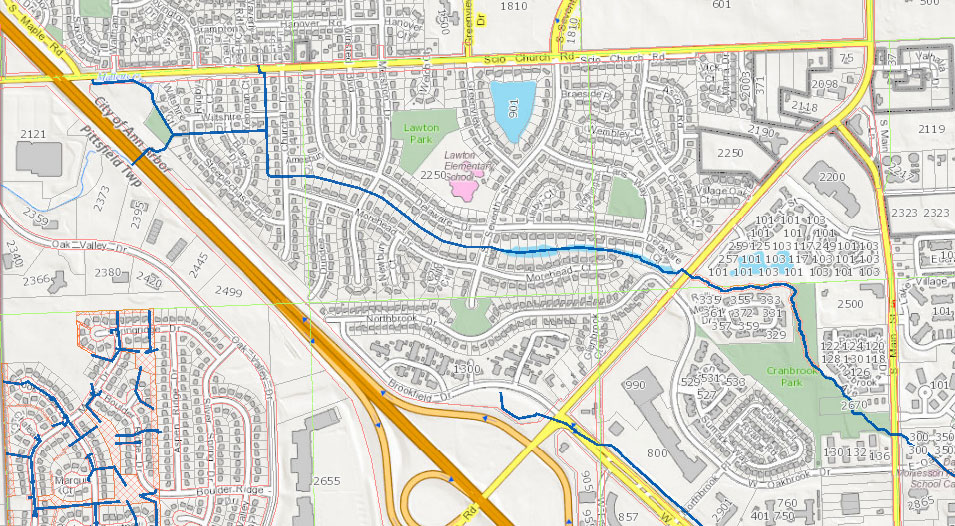
  27. http://annarborchronicle.com/wp-content/uploads/2012/08/MalletsDrainFloodingResolution.jpg
  28. http://annarborchronicle.com/wp-content/uploads/2012/10/600-Oct-15.jpg
  29. http://annarborchronicle.com/wp-content/uploads/2012/10/AAS-Conceptual-Construction-Costs-1.pdf
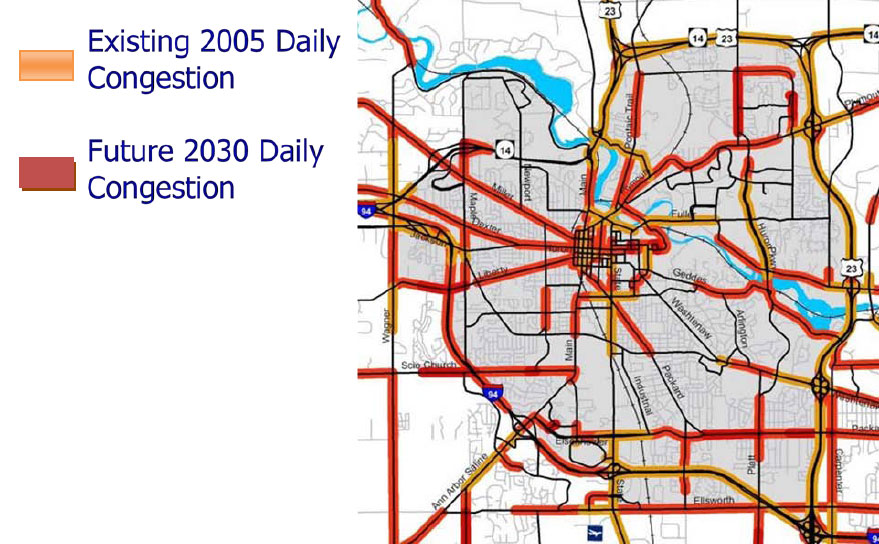
  30. http://annarborchronicle.com/wp-content/uploads/2012/10/AnnArbor-Congestion-now-future.jpg
  31. http://annarborchronicle.com/wp-content/uploads/2012/10/Appeal-12-263-Askins-map-historical-flooding1.pdf
  32. http://annarborchronicle.com/wp-content/uploads/2012/10/briere-derezinski-600.jpg
  33. http://annarborchronicle.com/wp-content/uploads/2012/10/cooper-deck-600.jpg
  34. http://annarborchronicle.com/wp-content/uploads/2012/10/EcologyCenter-Support-Resolution-Oct-2012.pdf
  35. http://annarborchronicle.com/wp-content/uploads/2012/10/greenbelt-hamstead-lane.jpg
  36. http://annarborchronicle.com/wp-content/uploads/2012/10/PA2PPositionPaper.pdf
  37. http://annarborchronicle.com/wp-content/uploads/2012/10/powers-ezekiel-600.jpg
  38. http://annarborchronicle.com/wp-content/uploads/2012/10/shiffler-mitchell-anglin-600.jpg
  39. http://annarborchronicle.com/wp-content/uploads/2012/10/smith-lax-600.jpg
  40. http://annarborchronicle.com/wp-content/uploads/2012/10/smith-listening-600.jpg
  41. http://annarborchronicle.com/wp-content/uploads/2012/10/teall-transit-map-600.jpg
  42. http://michigan.sierraclub.org/huron/
  43. http://protectourlibraries.org/
  44. http://wbwc.org/
  45. http://www.a2gov.org/government/city_administration/city_clerk/pages/default.aspx
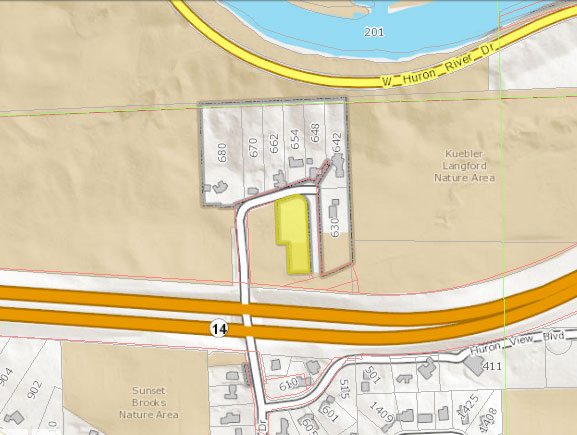
  46. http://www.a2gov.org/government/communityservices/ParksandRecreation/parks/Features/Pages/KueblerLangford.aspx
  47. http://www.a2gov.org/government/communityservices/planninganddevelopment/planning/Pages/ZoningOrdinanceReorganizationProject.aspx
  48. http://www.a2gov.org/government/publicservices/fleetandfacility/airport/Pages/default.aspx
  49. http://www.ci.ann-arbor.mi.us/government/communityservices/planninganddevelopment/planning/Pages/NorthMainHuronRiverCorridorProject.aspx
  50. http://www.ecocenter.org/
  51. http://www.environmentalcouncil.org/
  52. http://www.michiganlcv.org/
  53. http://www.soloaviation.aero/

The personal cloud series

In today’s column on wired.com I discuss ways to manage overlapping personal, team, and public calendars.

It’s the 21st in the series, here’s the whole list:

The future’s here, but unevenly distributed 2012-03-02
Kynetx pioneers the Live Web 2012-03-09
What’s in a name? In the cloud, a data service! 2012-03-16
The translucent cloud: balancing privacy and convenience 2012-03-23
The not-so-hidden risk of a cloud meltdown, and why I’m not so worried 2012-03-30
Picture this: hosted lifebits in the personal cloud 2012-04-06
The intentional cloud: say what you mean, become what you say 2012-04-20
Owning your words: personal clouds build professional reputations 2012-04-27
Your smart meter’s data belongs in your personal cloud 2012-05-04
The web is the cloud’s API 2012-05-18
Calendars in the cloud: no more copy and paste 2012-06-01
Publishing has perished: long live the personal cloud 2012-06-08
The personal cloud’s third dimension: webmakers 2012-06-22
Personal cloud as platform: mix and match wisely 2012-06-29
Cooperating services in the cloud 2012-07-13
A domain of one’s own 2012-07-27
I say movie, you say film, our personal clouds can still work together 2012-08-12
Hello personal cloud, goodbye fax 2012-08-31
From personal clouds to community clouds 2012-09-14
Why Johnny can’t syndicate 2012-10-09
Scoping the visibility of your personal cloud 2012-10-19

A great disturbance in the force

If you’re a coach, parent, or student involved with high school sports, you may know of a site called HighSchoolSports.net. It’s a service used by many schools, including the ones in my town, to manage information about teams and schedules. For the elmcity project it’s been a stalwart provider of iCalendar feeds, enabling me to show high school and middle school contests — soccer, football, lacrosse, swimming, etc. — on community-wide calendars in many cities.

Until recently.

One day I noticed a flood of errors from the HighSchoolSports.net feeds. USA Today, it turns out, had acquired HighSchoolSports.net. At first I hoped the errors were just a redirection snag. But when I visited the new site, at usatodayhss.com, I was shocked to see that the iCalendar feature had evidently been removed.

Could that really be true? I wrote to ask; here is the reply.

Thank you for contacting us regarding the iCal feature that was once located on HighSchoolSports.net

The iCal feature, for syncing to personal calendars, is no longer an available feature on USATodayhss.com

We will be launching a mobile version of USATodayhss.com in the very near future. With this mobile feature, you will be able to check schedules on the go with your smart phones or any available internet connective devices.

It was as if a million voices cried out in terror and were suddenly silenced.

USA Today, please reconsider. You are now the steward of data flows that matter to thousands of communities. The data is of a specific type. There is a longstanding standard Internet way to enable that specific type of data to syndicate not only to personal calendars but also to community calendars. A mobile app will be a nice addition. But it is not a replacement for standard data feeds that can syndicate into a variety of contexts.

Thought leadership at the Ann Arbor District Library

In Book: A Futurist’s Manifesto, which is taglined Essays from the bleeding edge of publishing and is co-edited by Brian O’Leary and Hugh McGuire, there’s a refreshingly forward-thinking chapter on public libraries by the Ann Arbor District Library’s Eli Neiburger. In The End of the Public Library (As We Knew It) Eli describes an intriguing model for libraries as purveyors of digital stuff. If you’re a creator of such stuff, and if you’re willing to sign the AADL Digital Content Agreement, you can license your stuff directly to the library:

The Agreement establishes that the library will pay an agreed-upon sum for a license to distribute to authenticated AADL cardholders, from our servers, an agreed-upon set of files, for an agreed-upon period of time. At the end of the term, we can either negotiate a renewal or remove the content from our servers.

The licenses specifies that no DRM, use controls, or encryption will be used, and no use conditions are presented to the AADL customer. In fact, our stock license also allows AADL users to download the files, use them locally and even create derivative works for personal use.

Pretty radical! Why would you, the creator of said stuff, want to take this crazy leap of faith? Eli explains:

Instead of looking at the license fee as compensation for something like a one-time sale, the pricing works when the rightsholder considers how much revenue they would like to expect during the license term from our 54,000-odd cardholders. For niche creators, it’s not hard for the library to beat that number, and all they have to do to get it is agree to the license and deliver the files to our server.

They’re not releasing their content to the world (especially because it’s already out there). They’re just granting a year or so of downloads to these 54,000 people. They get more revenue than they would likely get from those people up front, and the library gets sustainable, usable digital content for its users.

Eli thinks this won’t work for in-demand mass-market stuff anytime soon, if ever. But as he points out:

When everything is everywhere, libraries need to focus on providing — or producing — things that aren’t available anywhere else, not things that are available everywhere you look.

Of course public libraries have always been producers as well as providers. Things libraries produce include local collections, like the Keene Public Library’s exquisitely-curated historical photos and postcards and the Ann Arbor District Library’s The Making of Ann Arbor.

Libraries are also producers of community events, and here’s one I’m delighted to announce will happen at the Ann Arbor District Library on September 26:


A Seminar on Community Information Management

Everybody lives online now. Knowing how to collect and exchange information is now as important a skill as knowing how to drive, but it’s not enough: in order to make the web really work for you, you have to know how to project yourself online, and how to manage the boundary between what’s private and what’s public.

Cities and towns need to know this too. From the mayor’s office and local schools to the slow-pitch league and the local music scene, communities need to have these same skills if they are to survive and thrive in the 21st Century.

This seminar will explore what those skills are and how we can use them to make our communities stronger. We will use one particular case — sharing and synchronizing event calendars in Ann Arbor — to illustrate ideas, but the basic principles we will discuss can be applied to almost every aspect of community life.

While we’ll be talking about the web, this seminar is not for IT specialists, any more than knowing how to drive is something that only auto mechanics need to know.

A one-hour presentation by Jon Udell of Microsoft will be followed by another hour of Q&A and discussion.

This event is free of charge, and particularly of interest to those working for educational, civic and other not-for-profit organizations. It will be helpful to those who want better ways to get the word out about their own organization’s events and news, as well as those who are searching for such information and not always finding it easy to locate.

We’ll address these questions, among others:

– How can we, as a community, most effectively inform one another about goings-on in the region?

– How can our collective information management skills improve quality of life in the region?

– How can they also help us attract tourism and talent from outside the region?

– How do these same skills apply in other domains of public life such as political discourse and education?

We’re inviting organizations that — like public libraries — are significant producers of community events: public schools, colleges and universities, city governments, hospitals, cultural and environmental nonprofits, sports leagues, providers of social services, and more. We’re specifically looking for the people in such organizations who produce and promote events. If you’re one of those folks in or near Ann Arbor and would like to be invited, please let me know.

“Carol, meet Mrs. D; Mrs. D, meet Carol” (An ode to 3-way calling)

My latest wired.com column begins:

Back in February my son lost control of his car and landed in the hospital. Fortunately he has recovered from his injuries. And fortunately we have health insurance. So everything’s OK. However, I’m still — six months later — trying to untangle the bureaucratic mess that ensued.

Multiple health-care providers and multiple insurers are involved. They don’t talk to each other directly. It’s up to me to decode their communications meant for one another and route them appropriately. In the column I imagine a cloud-based tool that helps me do that, and I may live long enough to use it someday. But for now there’s a simple tool, often overlooked, that can help you hack through these bureaucratic thickets. It’s 3-way calling.

Once in an airport I saw a guy with a payphone in one hand and a cellphone in the other hand. He grew more and more agitated. Finally he removed his head from between the phones, rotated one of them, slapped them together microphone-to-speaker, and yelled “Talk to each other!”

I do the same thing all the time, a bit less dramatically. Just this morning I learned from Mrs. D at the hospital that the health insurer still isn’t processing a pile of bills. She was asking me questions that only the insurer could answer. So I called up the health insurer and got Carol. She was asking me questions that only the hospital could answer. I did a hook flash, called Mrs. D, and flashed again.

“Carol, meet Mrs. D; Mrs. D, meet Carol.”

And then I just listened to them work it out. When you do this kind of thing, it’s always fascinating to observe the degree to which organizations are hamstrung by their own org charts, acronyms, and methods. As detailed in the column, the initial sticking point was a magic token called the Exhaustion of Benefits letter, which was supposed to trigger the cutover from auto to health insurance. It took me a long time to figure out what that was and where to route it, but even after I did things remained stuck.

On the provider side, there were org-chart assumptions (e.g., that the hospital and the clinic are separate entities) not evident to the insurer. On the insurer side, there were acronyms (PIP) and terms (“ledger”) not understood by the provider. And on each side there were procedures unfamiliar to the other.

You would think that people who deal with these issues every day would know the drill. But there are many different ways to play the same game. It’s up to the customer to be the referee. If you haven’t tried it, use 3-way calling the next time you find yourself in the middle of one of these messes. For now it’s the best tool for the job.

Food safety and information safety revisited

In Food safety, information safety I reacted to Tim Eberly’s newspaper article on food safety which, I said, didn’t acknowledge an important primary source, Elisabeth Hagen’s blog post, which states the rationale for the poultry inspection policy changes that were the subject of the article.

I’ve since spoken to Tim Eberly about how he researched and wrote that story. He had, in fact, seen Elisabeth Hagen’s blog post, along with many other documents, some of which I’ll cite and link to here. And the rationale she presented, which I complained was missing from the article, is in fact there, albeit in a more diluted form.

In theory the article could have used quotes from Hagen’s blog, or from a HuffPo blog by her boss Alfred Almanza. But in practice, as Tim Eberly points out, these are blogs in name only, effectively they are press releases, and a reporter wants to advance the story beyond that. Unfortunately FSIS declined to be interviewed for the story.

All that said, I was still left wondering about the crux of the story. A decade ago the FSIS began a pilot program that would shift responsibility for direct inspection of slaughtered chickens from FSIS workers to poultry-plant workers. On the face of it, that sounds like a terrible idea, and there’s been lots of criticism ever since. But the FSIS rationale — that its resources are better spent assuring all-up compliance with safety standards, to prevent upstream contamination so less needs to be found downstream — sounds credible too.

Now the pilot program is slated to expand. What should we think about that? You’ll have to decide for yourself. Here are some sources I’ve rounded up that may help.

  • The proposed rule: Modernization of Poultry Slaughter Inspection

    http://www.fsis.usda.gov/OPPDE/rdad/FRPubs/2011-0012E.htm, 4/26/2012

  • Comments on the rule

    http://www.regulations.gov/#!searchResults;rpp=25;po=2250;s=FSIS-2011-0012, April-May 2012, total of 2260 comments

  • Alfred Almanza, FSIS administrator: blog post / news release

    http://www.fsis.usda.gov/News_&_Events/NR_041312_01/index.asp, 4/26/2012 (also http://www.huffingtonpost.com/alfred-v-almanza/chicken-inspection-new-policy_b_1424136.html, 4/13/2012)

    “We have more than a decade of experience slaughter running at 175 bpm, the proposed maximum line speed in the rule. And the data is clear that in these plants, the poultry produced has lower rates of Salmonella, a pathogen that sickens more than 1 million people in the U.S. every year. These plants also maintain superior performance on removing the visual and quality defects that don’t make people sick. Those are the facts, based on the data.”

  • FSIS Self-evaluation of HACCP Inspection Models Project (HIMP)

    http://www.fsis.usda.gov/PDF/Evaluation_HACCP_HIMP.pdf, Aug 2011

    “Because fewer inspectors are required to conduct online carcass inspection in HIMP establishments, FSIS is able to conduct more offline food safety related inspection activities. HIMP establishments have higher compliance with SSOP and HACCP prevention practice regulations and lower levels of non-food safety defects, fecal defect rates, and Salmonella verification testing positive rates than non-HIMP establishments. These data indicate that HIMP inspection provides improvements in food safety and other consumer protections.”

  • Independent review of the HACCP-Based Inspection Models Project by the National Alliance for Food Safety Technical Team

    http://www.fsis.usda.gov/OPPDE/nacmpi/Nov2002/Papers/NAFS97.pdf, 2002

    Conclusions

    1. The authors urge continued FSIS oversight and continuous re-evaluation as HIMP is more broadly implemented.

    2. At this time, no convincing arguments were identified which indicate that adoption of the modified system, under regulatory supervision, would increase risk.

    3. More importantly, the authors find that there are several lines of evidence that strongly argue process improvements from the consumer perspective as related to adoption of the HIMP system

  • GAO report: Weaknesses in Meat and Poultry Inspection Pilot Should Be Addressed Before Implementation, 2001

    http://www.gao.gov/assets/240/233016.pdf

    “It is questionable whether the data generated by the project are indicative of how all of the chicken plants’ inspection systems would perform if modified inspections were adopted nationwide. First, the chicken pilot that USDA designed lacks a control group — a critical design flaw that precludes a comparison between the performance of the inspection systems at those plants that volunteered to participate in the pilot and that of plants that did not participate. Without a control group, USDA cannot determine whether changes in inspections systems are due to personnel changes or other possible explanations, such as the addition of chlorine rinses.”

That last item helps me contextualize the story, which ends like this:

At least one elected official wants FSIS to put the brakes on its proposal.

U.S. Sen. Kirsten Gillibrand, D-New York, asked GAO to conduct another audit of FSIS’s pilot program. The agency said it will do so soon. She then sent a letter to Vilsack, asking him to delay the changes.

“I do not believe USDA should yield inspection responsibilities to plant personnel that have an inherent conflict of interest unless [the pilot program] can be independently verified to be safe and effective,” Gillibrand wrote.

Vilsack wrote back to Gillibrand in a letter filled with FSIS’s talking points on the issue. But more notable is what’s missing: Vilsack doesn’t address the senator’s request.

Reading between the lines, advocates say, that doesn’t spell good news.

I’m now inclined to agree. It sounds like there should be an independent audit of the pilot, and better analysis of the tradeoffs between using FSIS inspectors to monitor plants for all-up compliance with safety standards versus using them side-by-side with plant inspectors looking at birds.

To get to this point, though, I had to work pretty hard to find and evaluate the reporter’s sources, and understand his process. I’m grateful to Tim Eberly for taking the time to help me. I sure wish, though, that journalistic convention permitted him to cite and link to the sources he used.

Food safety, information safety

Yesterday my family and I read this article on food safety which was syndicated to our local paper from the Atlanta Journal-Constitution. It begins provocatively:

One-third of a second.

That’s how long a federal inspector will have to examine slaughtered chickens for contaminants and disease under new rules proposed by the federal government.

In the ensuing 1300 words of the main story that was syndicated to our paper, plus 1100 words of sidebars not included, the reporter — Tim Eberly — explores how the proposal will shift responsibility for hands-on inspection from federal inspectors to poultry plant workers. It’s a portrait of yet another disturbing lapse of oversight in our national food safety system. That much was clear to us when we finished the article. But we were left wondering: why would the USDA so flagrantly subvert its mission?

From the article:

The USDA’s Food Safety Inspection Service, which oversees poultry plants, believes the changes would “ensure and even enhance the safety of the poultry supply by focusing our inspectors’ efforts on activities more directly tied to improving food safety,” FSIS [the USDA’s Food Safety and Inspection Service] spokesman Dirk Fillpot said in a statement.

The agency says it wants inspectors to focus on issues that pose the greatest health risks to the public.

That still doesn’t really explain the USDA’s rationale, though. So I spent five minutes searching online and discovered the following facts:

  • The USDA has a blog.

  • To which USDA officials frequently contribute.

  • Including Dr. Elisabeth Hagen, who is not just an FSIS spokesperson but in fact the offical who oversees the agency’s policies and programs.

On April 19, 2012, Dr. Hagen cited the rationale that was missing from Tim Eberly’s story (bold emphasis mine):

Today, USDA announced an extension to the public comment period for a proposed rule that would modernize the poultry slaughter inspection system.  This new plan would provide us with the opportunity to protect consumers from unsafe food more effectively.  We recognize that this proposal would represent a significant change from the current system and has sparked a debate on how poultry is inspected.  We also value the different opinions being expressed about the proposal and have extended the public comment period to ensure all sides are presented in this debate.

It may surprise you to learn that the USDA has been inspecting poultry in largely the same way since the 1950’s. So, while our scientific knowledge of what causes foodborne illness has evolved, our inspection process has not been updated to reflect this new information. Under this modernization proposal, significant public health benefits will be achieved and foodborne illness will be prevented by focusing our inspectors attention on activities that will better ensure the safety of the poultry you and your family enjoy.

One thing we have learned from the last few decades of advances in food safety technology is that the biggest causes of foodborne illness are the things you don’t see like the harmful pathogens Salmonella and Campylobacter. As part of a continual effort to improve our inspection system, FSIS is proposing to move some inspectors away from quality assurance tasks—namely checking carcasses for bruises and feathers—to focus on food safety tasks, such as ensuring sanitation standards are being met and verifying testing and antimicrobial process controls. This science based approach means our highly-trained inspectors would spend less time looking for obvious physical defects and more time making sure steps poultry processing facilities take to control food safety hazards are working effectively.

The increased emphasis on food safety tasks proposed under the rule is consistent with the agency’s focus on foodborne illness prevention.  Instead of focusing on quality assurance, inspectors will now be able to ensure plants are maintaining sanitary conditions and that food safety hazards are being reduced throughout the entire production process.

Under a pilot program started in 1999, known as the HACCP Inspection Models Program, 20 broiler plants have served as “trial plants” for this new proposal. Test results from the poultry produced in those plants shows lower rates of Salmonella before it goes to the grocery store. The data and test results from this pilot program demonstrate that quality assurance tasks, such as checking for bruises and blemishes, do not provide adequate food safety protections as once was thought over 60 years ago.

Over the years we have seen — again and again — the need to modernize to keep pace with the latest science and threats. This poultry slaughter modernization proposal is about protecting public health, plain and simple, and I encourage stakeholders and the public to read the proposal and then let us know what you think.

Why couldn’t Tim Eberly have found, quoted from, and cited the USDA’s authoritative statement? Why couldn’t the editor who syndicated it into my local paper have added value by doing so?

There’s an analog to food safety: information safety. Reporters (food producers) and editors (inspectors) are chained to a fast-moving production line. But science-based methods can help keep us safe. Use the precious few seconds available to find, and report, authoritative sources.

Where have all the bloggers gone?

When Dave Shields returned from a recent “software sabbatical” (no blogging, tweeting, or Facebooking since 2009) he wondered: Where have all the bloggers gone?:

I suggest you visit Sam Ruby’s planet.intertwingly.net.

(A “planet” is just an aggregation of blogs. The planet hoster makes up a list of blogs, then puts together a simple program so that, whenever a new blog post is made by *anyone* on the list of bloggers, then the blog post is copied to the planet. In brief, readers of the planet see *all* the blogs posts in the list of chosen blogs.)

Now that I’m back blogging, I have found that if I write a post in the morning, and then write another later in the day, or the next morning, then there are only a handful of blog posts from all the other members of the planet in between.

I’m one of those listed at planet.intertwingly.com, and I’m guilty as charged:

Of course that’s a view of the tech blogosphere. But my wife Luann, who blogs in a very different sphere of interest, shows a similar pattern:

Perhaps a more interesting question than “Where have the bloggers gone?” is “What were they doing in the first place?” In my case, from 2003 through 2006, blogging was part of my gig at InfoWorld. For many of the others listed at planet.intertwingly.com it was a professional activity too. Collectively we were the tech industry thinking out loud. We spoke to one another through our blogs, and we monitored our RSS readers closely. That doesn’t happen these days.

Obviously Twitter, Facebook, and (for geeks particularly) Google+ have captured much of that conversational energy. Twitter is especially seductive. Architecturally it’s the same kind of pub/sub network as the RSS-mediated blogosphere. But its 140-character data packets radically lowered the threshold for interaction.

It’s not just about short-form versus long-form, though. Facebook and Google+ are now hosting conversations that would formerly have happened on — or across — blogs. Keystrokes that would have been routed to our personal clouds are instead landing in those other clouds.

I’d rather route all my output through my personal cloud and then, if/when/as appropriate, syndicate pieces of it to other clouds including Twitter, Facebook, and Google+. A few weeks back, WordPress’s Stephane Daury reminded me that I can:

@judell: since your blog is on (our very own) @wordpressdotcom, you can setup the publicize option to push your posts: http://wp.me/PEmnE-1ff.

I replied that I knew about that but preferred to crosspost manually. But I spoke too soon. My reason for not wanting to automate that push was that I wanted to tweak whether (or how) it happens. I should have realized that WordPress had thought of that:

Nice! This is an excellent step in the right direction. Thanks for the reminder, Stephane!

What’s next? Here are some things that will help me consolidate my output in my own personal cloud where it primarily belongs.

  • Different messages to each foreign cloud. Because headlines often need to be audience-specific.

  • Private to my personal cloud, public to foreign clouds. Because the public persona I shape on my blog serves different purposes than the ones I project to foreign clouds. Much of what I say in those other places doesn’t rise to the level of a public blog entry, but I’d still like to route that stuff through my personal cloud so I can centrally control/monitor/archive it.

  • Federate the interaction siloes. Because now I can’t easily follow or respond to commentary directed to my blog echoes in foreign clouds. Or, again, centrally control/monitor/archive that stuff.

In my Wired.com column I often reflect on these kinds of issues. The personal cloud services I envision mostly don’t exist yet. But it’s great to see WordPress.com moving in that direction!

Ideas

The new documentary about Woody Allen is a fine portrait of a long creative life. For me the best part was seeing his drawer of ideas. Early in part two of the documentary, Dick Cavett says Woody Allen once told him that he had endless ideas for movies. Cavett was amazed. “It would take me a year to have just one idea! He has many?” But then we see how the trick is done. Cut to Woody’s bedroom. He opens a drawer in his bedstand, takes out a pile of scraps, spreads them out on the bed, and talks about his process.

Woody: This is my collection, all kinds of scraps, written on hotel stationery and whatnot. I’ll ponder these things. I go through this all the time, every time I start a project.

Interviewer: Read me one note.

Woody: A man inherits all the magic tricks of a great magician. That’s all I have there. But I could see a story.

Ideas, for the most part, are just seeds. They’re cheap and plentiful. A man wakes up in the future (Sleeper). The mother of a man’s genius adopted son turns out to be a prostitute (Mighty Aphrodite). Some ideas are better than others, no doubt. But to grow them into something that matters you have to see the story. And then tell the story.

Calendar webrings

The elmcity project enables curators to create and manage calendar syndication hubs. These were never intended as destination sites, but rather as infrastructure to support what I’m calling attention hubs: newspapers, hyperlocal blogs, chambers of commerce, arts councils. Such organizations often want to build and display a comprehensive community calendar. They always fail to do so because of what I’m calling the Submit Your Event Antipattern, which looks like this:

I want attention hubs to align themselves with syndication hubs, and to give their contributors an alternative to the copy and paste approach to data syndication. But the attention hubs thus far mostly don’t want to participate. So now I’m trying a complementary approach to building networks of calendar feeds.

The elmcity concept is, after all, radically decentralized. So why should central attention hubs be gatekeepers governing the growth of these networks? They shouldn’t! They should be participants, but so should all the contributing sites.

The model I’ve come up with harkens back to the old idea of a webring: a group of sites that declare a shared interest in some topic. So, consider the hub I’ve built for New Hampshire’s Monadnock Region, which includes Keene, various surrounding towns, and (honorarily) Brattleboro, Vermont. The events flowing through this hub are, of course, tagged. Here’s the default URL for music:

http://elmcity.cloudapp.net/MonadnockNH/html?view=music

Here are the sources that are currently feeding into that view:

  • Apple Hill Center for Chamber Music
  • Fritz Belgian Fries (eventful)
  • Inferno (eventful)
  • McCue’s (eventful)
  • Metropolis Wine Bar (eventful)
  • Mole Hill Theatre (facebook)
  • Monadnock Folklore Society
  • Peterborough Folk Music Society
  • Railroad Tavern (eventful)
  • The Beacon (eventful)
  • The Listening Room at MindFull Books & Ephemera (eventful)
  • The Starving Artist (facebook)
  • Vermont Jazz Center (facebook)
  • Waxy O’Connors (facebook)

These venues represent the music scene in the Monadnock Region, and they have a collective interest in branding and promoting the scene. I’d like to help them do that. So I’ve made a widget-maker that produces a widget they can embed on their sites. Of course it doesn’t only work for the music scene in my region.Here are some other variations on the theme.

This will work for any of the hubs featured at elmcity.cloudapp.net. They’re all still in a bootstrap phase. I’ve seeded them with every iCalendar feed I’ve been able to find and categorize. The resulting views capture enough to be interesting and somewhat useful, but they aren’t yet embraced by the organizers of events. If you’re one such organizer, I’d love for you and the others who collectively form the music or arts or sports or tech scene in one of the places I’m targeting to try making and using a calendar webring.

Networks of cities

This month’s Long Now talk is Benjamin Barber’s If Mayors Ruled the World. In the talk, which is a warmup for a forthcoming book with the same title, Barber offers an intriguing view of global governance. It won’t arise from a formal coalition among nation states, he argues. Instead it will emerge — indeed already is emerging — as cities form networks and share best practices. Stewart Brand summarizes the argument:

New York City’s “hyperactive” mayor Michael Bloomberg says, “I don’t listen to Washington very much. The difference between my level of government and other levels of government is that action takes place at the city level. While national government at this time is just unable to do anything, the mayors of this country have to deal with the real world.” After 9/11, New York’s police chief sent his best people to Homeland Security to learn about dealing with terrorism threats. After 18 months they reported, “We’re learning nothing in Washington.” They were sent then to twelve other cities — Singapore, Hong Kong, Paris, Frankfurt, Rio — and built their own highly effective intelligence network city to city, not through Washington or Interpol.

It’s convergent evolution, Barber suggests. Jam a few million people into a limited space and, no matter which nation owns that territory, you’re dealing with the same social, economic, and environmental problems. Solutions that work in one city are likely to work elsewhere. And cities, unlike nations, can’t kick the can down the road indefinitely. The garbage has to be picked up sooner rather than later.

I’m interested in this notion because I’m working on a city-scale best practice that will, I hope, take root in a few cities and then spread to others.

Let’s give every fact its own home page on the web

My sister is writing a report for which she needs facts about the growth of New Jersey’s foreign-born population. She found some numbers at census.gov, and we explored them on a Facebook thread. For my friend Mike Caulfield, who’s writing a textbook called Making Fair Comparisons, the discussion reinforced a lot of what he’s been teaching lately. For me it was a reminder that the dream of straightforward access to canonical facts remains elusive.

I wanted to check my sister’s sources. She gave me this link: http://quickfacts.census.gov/qfd/states/34000.html. That page says New Jersey’s 2010 population was 8,791,894, of which 20.3% were foreign-born — so we can compute the number of those folks to be 1,784,754.

I never did find the 2000 counterpart to that report. While searching the FactFinder site, though, I found this page where, with further searching within the page — for Geography: New Jersey and “foreign born” — I landed on a report called “SELECTED CHARACTERISTICS OF THE NATIVE AND FOREIGN-BORN POPULATIONS 2010 ACS 1-year estimates” with an ID of S0501. According to it, there were 1,844,581 foreign-born New Jerseyans, or 21% (not 20.3%) of the same 8,791,894 total.

I cited that link in our Facebook discussion, but later was horrified to find that I actually hadn’t. The base URL never changes. If I navigate to a report on foreign-born New Jerseyans, and you navigate to the same report for Texans, or the whole US, it’s the same URL. This is catastrophic if you’re trying to have a discussion informed by canonical citation of source data.

Meanwhile I still hadn’t found the 2000 counterpart to http://quickfacts.census.gov/qfd/states/34000.html. Back on the FactFinder site I searched in vain for “SELECTED CHARACTERISTICS OF THE NATIVE AND FOREIGN-BORN POPULATIONS 2000” and for combinations of terms like “foreign-born 2000.” So I searched the web for “foreign-born 2000 census”; both Google and Bing pointed me to http://www.census.gov/prod/2003pubs/c2kbr-34.pdf. From this PDF file I was able to extract New Jersey’s total (8.414,350) and foreign-born (1,476,327) populations in 2000. Now I could complete this table (using, arbitrarily, one of the values I found for 2010 foreign-born):

2000	8,414,340	1,476,327	17.5%
2010	8,791,894	1,784,754	20.3%

Now, finally, we could have the real discussion. Should growth be evaluated in terms of percentages, so (20.3-17.5)/20.3 = 15.7%, or absolute numbers, so (1.784-1.476)/1.476 = 20.9%? It depends, my friend Doug Smith said, on the point you’re trying to make:

When you do the calculation on the growth of the percentages it does not take into account that the total population also grew over the 10 years. So while the percentage of foreign- born people grew by 15.7%, the actual number of foreign-born people in the state grew by 20.3%. If you’re trying to make a case that depends on the total number, like services consumed or potential market size, then you should use the growth of total numbers. If you’re trying to make a case based on percentages, for example the likelihood of encountering a foreign-born individual, then growth based on percentages would be better.

Doug added this intriguing observation:

This small amount of data actually presents a very interesting picture. The total population of NJ grew 4.5% over ten years. During that time, the natural born population grew only 1%, while the foreign-born population grew 21%. This suggests that more than 80% of the population increase over these ten years came as a result of immigration. So, while going from 17.5% foreign-born to 20.3% foreign-born doesn’t seem like much of a change to me, the implications seem huge.

That made me wonder about comparable figures for other states. But the prospect of digging out the numbers from a mishmash of HTML pages and PDF files killed that curiosity. What would help? Let’s give every fact its own home page on the web. The OData is one good way to do that. Imagine census.gov as a web of data. A top-level path might be:

http://odata.census.gov/states

A next-level path might be:

http://odata.census.gov/states/NewJersey

A path to the ACS survey might be:

http://odata.census.gov/states/NewJersey/S0501

By year:

http://odata.census.gov/states/NewJersey/S0501/2010

And finally, paths to individual facts might be:

http://odata.census.gov/states/NewJersey/S0501/2000/ForeignBorn

http://odata.census.gov/states/NewJersey/S0501/2010/ForeignBorn

Nothing’s hidden behind a JavaScript veil or stored in a cookie. The entire web of data is navigable in a standard browser, which displays human-readable Atom feeds if set for human viewing, or raw XML or JSON if used to discover URLs for machine processing. Every URL is a canonical home page for a data set or an individual datum. User-friendly search and navigational tools are built on top of this foundation. Nobody has to deal with raw URLs and feeds. But they’re always available.

I’m not ungrateful for what census.gov (and so many other sites) offer. Any kind of web access to data is infinitely better than no access. But there are better and worse ways to provide access. It’s 2012. We ought to be doing better by now.

A general model for community information management

I was delighted to read this month’s Milestone column in the Ann Arbor Chronicle. Not only because it features the elmcity calendar syndication service, but also because the Chronicle’s editor, Dave Askins, connects the dots to a larger vision of community information management based on syndication of authoritative sources. Dave makes a seemingly unlikely comparison between the syndication of calendars and of crime reports. He traces a story that was reported by one publication, rewritten and retransmitted by others, and then revised by the original source in a way that wasn’t echoed by the secondaries.

The problem with the approach those organizations take to reporting the “spot news” of crime incidents is that they disconnect the information from its single, authoritative source. And as a result, any update to their original reports would need to be undertaken manually — that is, someone would need to think to do it.

Yes, exactly! Here’s the same thing in the calendar domain. The Knights Chess Club in Keene, NH, meets on Monday evenings. The venue used to be the Best Western hotel. A couple of years ago, the chess club posted that information on its website and also relayed it to our local newspaper, the Keene Sentinel. Sometime later, acting as a proxy for the chess club, I added the same info to one of the calendar feeds that flows into the Keene hub. Then I noticed the event had moved from the Best Western to the E.F. Lane, so I adjusted the event accordingly. Months later, I noticed the listing in the Sentinel. You can guess the punchline: the event was still reported to be at the Best Western! (It has since moved to Langdon Place.)

In the world I imagine and am trying to bootstrap, the chess club itself is the authoritative source for this information. The Sentinel syndicates it from the chess club, as does the chamber of commerce, and the Monadnock Shopper, and What’s Up in the Valley, and any other attention hub that cares about the chess club. When the club updates its info at the source, everybody downstream gets refreshed automatically. Attention hubs compete not by trying to capture the info exclusively, but by “amplifying the signal,” as Dave Askins so nicely puts it, in ways appropriate to their unique editorial missions and capabilities.

Here’s an architectural view of what I have in mind:

Monadnock Arts Alive is a real organization chartered to advance arts and culture in the Monadnock region. It runs an instance of an elmcity hub into which flow calendar feeds from local arts organizations, including the ones shown here.

Monadnock Arts Alive has relationships with the Mariposa Museum, the Sharon Arts Center, the Monadnock Folklore Society, and as few dozen other local arts and culture organizations. It’s appropriate for Arts Alive to merge their calendars into a view that brands them as a collection and “amplifies the signal.” Arts Alive can then retransmit that signal to one or more attention hubs that can leverage the editorial work done by Arts Alive — that is, gathering a set of feeds that represent the local arts scene, and working with sources to refine those feeds.

Attention hubs aren’t restricted by Arts Alive’s choices, though. The Sentinel, the Chamber, or What’s Up in the Valley can use Arts Alive’s combined feed if it suits them. Alternatively they can create their own views that merge some of the feeds on Arts Alive’s list with other feeds not on that list.

What emerges, in theory if not yet in practice, is a pool of sources underlying a network of hubs. In this network sources are always authoritative for their data, as intermediaries are always authoritative for the views of those sources they present. What’s more, all intermediaries can be bypassed. If as an individual I care a lot about a particular source, say the Monadnock Folklore Society, I can subscribe to that calendar directly on my desktop or phone. Similarly, if the Chamber of Commerce has a different idea than Arts Alive about which set of feed best represents the local arts scene, it can go direct to those sources and synthesize its own view.

It’s a very general model. We can, for example, apply it to Dave Askins’ crime reporting example. Police reports aren’t, after all, the only possible authoritative basis for crime reporting. Citizens are another. Major incidents provoke online discussion. That discussion can by aggregated by emergent tags. And it can be filtered by whitelisting particular blogs, Twitter accounts, or other sources according to their reputations. Who establishes those reputations? Attention hubs whose editorial choices define views of reality that subscribers either will or won’t find useful. If you find that an attention hub usefully aggregates citizen chatter you may decide to peer through that lens. If not you can go direct to the sources which, in this model, will always be transparently cataloged by intermediaries.

I’m working the calendar angle because I see it as a way to get a wide variety of people and organizations engaged with this model. But my hope is that they’ll be able to generalize from it, and apply it creatively in other domains.

The free rider solution

On certain summer nights in Keene, NH, you can wind the clock back 100 years and experience baseball from another era. Our town hosts an NECBL (New England College Baseball League) team called the Swamp Bats. Their home games, at the high school’s Alumni Field, are like Norman Rockwell paintings come to life. Fans arrive early to set up lawn chairs along the third base line. Between innings children compete in egg-balancing races. A few of the players will end up in the big show, but all of them remind us why baseball is the national pastime.

We like to get out to at least a few games each year. In years past the Bats’ Google Calendar helped remind me to do that. But this year the schedule became a silo. The data is trapped in a web page. It can no longer flow, as it once did, to Keene’s calendar hub or to my personal calendar.

Happily I found a way to liberate that data. So now you can once again see the Swamp Bats calendar here and subscribe to it here. The circumstances and techniques that made this possible are worth exploring.

It turns out that while the Swamp Bats’ own calendar is a data silo, the NECBL’s master calendar does the right thing and complements its HTML view with an iCalendar feed. Crucially the NECBL’s calendar does another right thing: it adopts a consistent naming convention. The titles of events on the calendar look like this:

VM@KS 6:30pm

DW@SM 6:30pm

NB@NG 6:30pm

That’s shorthand for:

Vermont Mountaineers vs Keene Swamp Bats at Keene

Danbury Westerners vs Sanford Mainers at Sanford

New Bedford Bay Sox vs Newport Gulls at Newport

To create an iCalendar feed for Keene home games, I used an iCalendar filter to find “@KS” in the titles of the NECBL feed and produce a new feed with just the matching events.

Since I’ve recently started an elmcity hub for Montpelier Vermont I did the same thing there. Filtering on “@VM” gives a view for the Vermont Mountaineers’ home games that you can see here and subscribe to here.

These maneuvers suggest an interesting twist on the free rider problem. When one person upgrades the quality of an online information source and makes the improved source available to everyone, the free ride everyone can enjoy isn’t a problem at all. It’s a solution.

Last week, for example, I visited Montpelier to speak with a state official about the elmcity project. He described a problem that’s familiar to many parents. His kids are in a sports league; their schedule comes to him formatted as an Excel spreadsheet; he can’t merge that Excel schedule with his personal calendar. So he transcribed the data into Google Calendar. And having done so, he shared it with other parents. That’s a free ride the sports league ought to provide. But in this era of abundant free cloud services, any parent can offer it instead, merely by satisfying a personal need. Web users who become web makers can turn the free rider problem into a solution.

Concerned about smart meter privacy? Richard Stallman is looking for someone to lead the charge.

My recent column on smart meters came to the attention of Richard Stallman, who worries about the privacy and surveillance issues I alluded to. In the course of our email discussion a question came up that I’d like to answer but can’t. When a smart meter is utility-owned, rather than DIY like mine, do any of the providers offer choice with respect to the granularity of the data feed that’s phoned home? In theory it would be possible to opt out of a realtime feed and only use the meter to automate the monthly accounting that’s currently still done by a visiting person. I doubt that any utility offers that but I’d like to be proved wrong, and either way it would be nice to know for sure.

Richard, by the way, would like to add the privacy/surveillance issues arising from smart meter deployment to his list of causes, and is looking for someone who wants to lead that charge. If you’re interested and qualified you are welcome to contact him. Here, as I have now learned firsthand, is the protocol. You’ll write to him at rms@gnu.org. You’ll receive an autoreply that begins:

I am not on vacation, but I am at the end of a long time delay. I am located somewhere on Earth, but as far as responding to email is concerned, I appear to be well outside the solar system.

After your message arrives at gnu.org, I will collect it in my next batch of incoming mail, some time within the following 24 hours. I will spend much of the following day reading that batch of mail and will come across your message at some point. If I write a response immediately, it will go out in the next outgoing batch–typically around 24 hours after I collected your message, but occasionally sooner or later than that. Please expect a minimum delay of between 24 and 48 hours in receiving a response to your mail to me.

If a conversation ensues, it will happen on that cycle. This strikes most people as odd. As Jeremy Zawodny once noted, though, Richard Stallman is Getting Things Done. Old School.

Why not tip for excellent online customer service?

A couple of weeks ago all the posts here became invisible. There didn’t seem to be anything I could have done wrong to cause that, so I wrote to the support team at WordPress.com about it. I got a prompt acknowledgement from Erica V. that something was, indeed, wrong. Soon after that she confirmed that the problem was fixed. That left me feeling pretty good about WordPress.com. It’s a free service, after all, I’m only a customer in a rather minimal way: I pay for domain name redirection and for the ability to edit my CSS file. Yet the customer service I received was outstanding.

Then, last week, something else went wrong. The widgets in the right column were getting bumped down by a post that didn’t belong in that column. I tried a few debugging strategies and then wrote to WordPress.com support again. Here was the prompt response from macmanx:

You’re all fixed up now. You had an extra div tag in “Meta-tools for exploring explanations,” but I removed it.

Oops. I know how to validate HTML and should have caught that myself. It’s not something I’d have wanted to bother the support team with. But they didn’t make me feel like a jerk. Again the problem was handled promptly and cheerfully.

You know, we tip for all sorts of services in the physical world, including ones delivered far less capably. Why not tip for excellent online customer service? If there were a tip jar for WordPress.com I’d have used it both times.

Hours, days, who’s counting?

Yesterday’s post contains an error so embarrassing that I was briefly tempted to yank the whole thing. But of course That Would Be Wrong. What’s more, the error supports the larger point I was trying to make before I derailed myself.

I was talking about Bret Victor’s notion of explorable explanations, which he illustrates on a page called Ten Brighter Ideas. I’d looked at it before, but when I revisited it yesterday I had trouble believing that the following claim could be true:

If every US household replaced 1 incandescent bulb with a compact fluorescent bulb, we’d save 11.6 TWh (terawatt hours), which is the energy equivalent of 1.5 nuclear reactors or 9.5 coal plants.

Some people intuit what these units and quantities mean. But most of us — me included — don’t. And even experts are prone to error. A few months ago I spotted one such error. A Ph.D. economist wrote an editorial that consistently used billions of barrels of oil rather than, as intended, millions. The column was syndicated to hundreds of newspapers, and so far as I know nobody noticed until I happened to check.

What prompted me to check? My friend Mike Caulfield, who’s been teaching and writing about quantitative literacy, says it’s because in this case I did have some touchstone facts parked in my head, including the number 10 million (roughly) for barrels of oil imported daily to the US.

The reason I’ve been working through a bunch of WolframAlpha exercises lately is that I know I don’t have those touchstones in other areas, and want to develop them. Having worked a few examples about global energy, I thought I’d built up some intuition in that realm. But in this case the intuition that prompted me to check Ten Brigher Ideas was wrong.

When I did check, things went completely off the rails:

If 111 million households each swap out one 75W bulb for a 25W bulb, saving 50W each for 180 hours (i.e. half of each day for a year), we’re looking at 100,000,000 * 50W * 180hr = 999GWh. We’re off by a factor of about 1000.

As Pasi points out in a comment:

Hmm, “half of each day for a year” is not 180 hours, but 365*24/2=4380 hours?

My brain thought days, my fingers wrote hours. I think I’m slightly dsylexic when it comes to units, and so I’m prone to that sort of error. It’s another reason why I use WolframAlpha to check myself. When I do that, I try to take advantage of WolframAlpha’s marvelous ability to automate conversions. For example, during an earlier exercise I needed to visualize the gallon equivalent of the energy released by combustion of one kilogram of gasoline. Normally this would entail looking up the density of gasoline, 0.726 g/cm3, applying that constant, and then converting to gallons. But in WolframAlpha the phrase density of gasoline is meaningful and can be used directly, like so:

http://www.wolframalpha.com/input/?i = ( 1 kilogram / density of gasoline ) in gallons

Similarly, here’s what I could have done to check the Ten Brighter Ideas claim:

http://www.wolframalpha.com/input/?i = (1/2 year) * 111,000,000 * 50W as TWh

That comes to 24 TWh, which is in the ballpark of the claimed 11.6. Maybe Bret assumed lights are cumulatively on 1/4 of the time, I haven’t checked, but if so that would nail it.

Why didn’t I write the WolframAlpha query that way in the first place? Because, I think, we still expect to do a lot of basic computation ourselves. You want the answer in hours? Put hours in. How many? You can figure that out. But should you?

I think it depends. It’s good to exercise your inboard computer — not only to calculate results but also to store and retrieve certain touchstone values. But it’s also good to delegate calculation, storage, and retrieval to outboard computers that can do these things better than we can — if that delegation can be smooth. WolframAlpha points to one way that can happen, Bret Victor’s simulations point to another.

Meta-tools for exploring explanations

At the Canadian University Software Engineering Conference in January, Bret Victor gave a brilliant presentation that continues to resonate in the technical community. No programmer could fail to be inspired by Bret’s vision, which he compellingly demonstrated, of a system that makes software abstractions visual, concrete, and directly manipulable. Among the inspired were Eric Maupin and Chris Granger, both of whom quickly came up with their own implementations — in C# and ClojureScript — of the ideas Bret Victor had fleshed out in JavaScript.

Others imagined what the educational value of such a system might, or might not, be. Noting that Bret’s demo “looks like a powerful visualization system,” Mark Guzdial wrote:

The problem is that visualization is about making information immediate and accessible, but learning is about changes in the mind — invisible associations and structures.

Ned Gulley echoed Mark’s concerns. Citing Bret’s 2009 essay Simulation as a Practical Tool — which contains live demos that use simulation to solve a physics word problem — Ned writes:

It’s beautiful! And it works well as long as you don’t want to modify the essential parameters of the problem. But Victor isn’t helping us learn the metatools that he uses to create this environment. To be fair, that wasn’t his goal, but as a user, I feel like I’m locked in a pretty small task box. More to the point, it’s expensive to create these interactive gems, and there’s only one Bret Victor.

Victor’s real power is his ability to rapidly create and deploy these tools. In a twinkling he can size up a task that is worth studying, put a box around it and spin a tool. He does this so effortlessly, with such mesmerizing legerdemain, that we lose sight of this meta-skill. What Victor was really doing in his talk was illustrating the power of tool spinning, the rapid creation of customized, context-sensitive, insight-generating tools. Direct manipulation is good, but the nature of direct manipulation changes with the context, and the context can’t always be anticipated.

My preferred goal is to make tool spinning (and tool sharing) as easy as possible. If tool spinning is easy, if that is the expressive skill that we give our users, then small task boxes aren’t a problem. You can always make more tools.

Don’t use the thing Bret made. Do the thing that Bret does.

Ned’s right about tool-spinning and I’ll come back to that. But first I want to consider Mark Guzdial’s critique, cited by Ned, that interactive simulations don’t help us build the mental muscles we need to reason analytically and symbolically. Indeed not. But Bret doesn’t claim that they do! In Simulation as a Practical Tool he says flatly:

Regardless of how it’s taught, most people will never be comfortable entering this level of abstraction in order to explore the problems of their lives.

That’s true for the physics problem Bret solves in that essay, it’s true for the programming challenges he tackles in his CUSEC demo, and it’s also true in all scientific and technological realms. Some people can reason effectively using abstract symbol systems. Most think more concretely and reason best about what they can see, touch, explore, control. What matters in the end is that people can reason effectively, about all sorts of things, especially about the scientific knowledge and technological machinery on which our civilization depends.

In his 2011 essay Explorable Explanations, and the companion demo Ten Brighter Ideas, Bret imagines a world in which public discourse about energy (or health or climate or economics) is facilitated by an explorable explanation that:

  • States assumptions, and ties them to supporting data.
  • Makes connections among interacting variables.
  • Enables the viewer/user to vary assumptions and observe consequences.

An example from Ten Brighter Ideas:

Suppose 100% of US households replaced 1 bulb at random with a compact fluorescent.

This, we learn, would save 11.6TWh per year, which is equivalent to 1.5 nuclear reactors or 9.5 coal plants. The underlined elements — 100% of households, 1 bulb — become sliders you can use to vary these inputs. What if only 20% of households get with the program? If each replaces 5 bulbs, we can get the same 11.6TWh savings.

Wait a sec. 11.6TWh? Terawatt hours? Let’s check. If 111 million households each swap out one 75W bulb for a 25W bulb, saving 50W each for 180 hours (i.e. half of each day for a year), we’re looking at 100,000,000 * 50W * 180hr = 999GWh. We’re off by a factor of about 1000. Let’s find out why.

The constants Bret is using are right there in the HTML. Here’s the relevant one:

<div id=”k_nuclearAnnualEnergy”>796.488e12</div>

Likewise the data that Bret is using is right there in the HTML. Here’s the relevant citation:

US Nuclear Generation of Electricity :
December 2009

The spreadsheet gives total US nuclear power production for 2009 as 798,854,585 MWh. That’s roughly 800 million MWh. I guess the constant should have been 796.488e9, not 796.488e12. (Or the units should have been GW not TW.) Checking that: http://www.wolframalpha.com/input/?i=800 million MWh = 1/4 yearly energy production of all nuclear power plants. OK, that makes sense. I can believe US nuclear energy production is in the ballpark of 1/4 of worldwide production.

Now, here’s the claim that Bret’s active document explores:

If every U.S. household installed just one compact fluorescent light bulb, it would displace the electricity provided by one nuclear reactor. 1 = 1!

It comes from a brochure at BeyondNuclear.org entitled Ten Reasons to Say No to Nuclear and Ten Brighter Ideas. As we can see, that’s wrong. We’d need 1000 bulbs per household, not 1 bulb, to displace one nuclear reactor. 1000 = 1!

This kind of thing is embarrassing, but it happens all the time. And while Bret will surely wince if he happens to read this (unless I’ve got it wrong somehow, in which case I’ll wince),

Wince. (See comments.)

We need robust explorable explanations that state assumptions, link to supporting data, and assemble context that enables us to cross-check assumptions and evaluate consequences.

And we need them everywhere, for everything. Consider, for example, the current debate about fracking. We’re having this conversation because, as Daniel Yergin explains in The Quest, a natural gas revolution has gotten underway pretty recently. There’s a lot of more of it available than was thought, particularly in North America, and we can recover it and burn it a lot more cleanly than the coal that generates so much of our electric power. Are there tradeoffs? Of course, There are always tradeoffs. What cripples us is our inability to evaluate them. We isolate every issue, and then polarize it. Economist Ed Dolan writes

These anti-frackers have a simple solution: ban it.

The pro-frackers, too, have a simple solution: get the government out of the way and drill baby, drill.

The environmental impacts of fracking are a real problem, but one to which neither prohibition nor laissez faire seems a sensible solution. Instead, we should look toward mitigation of impacts using economic tools that have been applied successfully in the case of other environmental harms.

In order to do that, we’ve got to be able to put people in both camps in front of an explorable explanation with a slider that varies how much natural gas we choose to produce, linked to other sliders that vary what we pay, in dollars, lives, and environmental impact, not only for fracking but also for coal production and use, for Middle East wars, and so on.

Where will these tools come from? As Ned Gulley says, they’re expensive to build, and you need a scarce talent Bret Victor to build them. And even then, as we’ve seen here, it’s tricky to get right. Where will the tool-spinning meta-tools come from?

I actually think Bret knows, or at least intuits very well, how we can get there, and I think he has shown the way in his book-length 2006 essay MagicInk. That’s what I meant to write about today, but after an unexpected detour through Ten Brighter Ideas I think I’ll do that another time. Meanwhile if you haven’t read MagicInk I commend it to you.

Searching for Andy: an Ob-Platte puzzle

In Fluid Concepts and Creative Analogies, Douglas Hofstadter (and a crew of talented students) argue that analogy-making is a core characteristic of human intelligence. The book is full of delightful puzzles. One class of puzzle goes like this:

  • What is the Ob of Nebraska? (The Platte. Hence the name for these: Ob-Platte puzzles)

  • What is the Newark of Delaware?

  • What is the Gettysburg of Hawaii?

The authors write:

If one were to ask, “What is the Atlantic City of France?”, a large number of people would undoubtedly answer “Monaco”, even knowing full well that Monaco is not a city inside France, but rather an independent, albeit small, country that is not in France, but borders it (the gambling city within Monaco is Monte Carlo). However, Monaco is world-famous for its casinos, is small enough to be thought of as a city, and like Atlantic City, is located on the sea.

I’m working on an Ob-Platte puzzle that you may be able to me with. It goes like this:

Who is the Andy Morikawa of Ann Arbor?

I’m working on the same puzzle for Berkeley, Boston, Providence, Portland, Seattle, Toronto, and a few other places where I’d like to convene a seminar on community information management. The first of these was held in Blacksburg, Virgina, during my recent visit there, and was successful because Andy Morikawa knew and invited all the right people. The Andy Morikawa of Blacksburg is a fellow at Virginia Tech’s Institute for Policy and Governance, and was until recently the executive director of the Community Foundation of the New River Valley.

Just as Monaco is not actually a city in France, the Andy Morikawa of Ann Arbor, Berkeley, and Providence might or might not be affiliated with the universities in those towns. Another Andy might be an independent community organizer, or a city councilor, or an economic development specialist, or the director of a nonprofit chartered to consolidate and promote cultural arts. He or she will certainly, though, be a well-known connector who has the ability to convene the kinds of folks I want to reach. They’ll come from the public schools, the colleges, the city government, the newspapers and online media, the music and dance scenes, the public library, the hospital, the chamber of commerce, the downtown merchants association, arts and culture nonprofits, social services organizations, sports leagues, environmental groups, and other centers of public life.

Crucially I am not looking for webmasters and IT staffers, but rather for leaders responsible for public engagement. The principles I’ll explain and demonstrate are ones that everyone can understand and apply. Once leaders understand what’s possible they can delegate to staff, but what they’ll delegate is nothing they couldn’t pretty easily do for themselves.

What makes this a tricky problem in social networking is that my best contacts are in the technical world, but I’m trying to reach outside it. That’s why I need an Andy to help me bridge the gap. If you are an Andy, or if you know an Andy, I’d really like to hear from you.

Jatoba at Waxy’s on Saturday night: A case study in data provenance and syndication

The bedrock principle at the core of the elmcity project is: own your data, syndicate it into contexts that need it. This applies far more broadly than to calendars, but I’m focusing on calendars now because we all still struggle to make sense of various personal, professional, and public timelines, so everyone (I hope) can relate to the challenge and the opportunity.

For the sorts of calendars you see at elmcity.cloudapp.net, which represent schools, libraries, museums, music venues, sports clubs, and other organizations offering schedules of activities to which the public is invited, the application of the principle is as follows. Publish your calendar from a single canonical source as two streams of information. One is an HTML page for people to read and interact with on your own website. The other is an iCalendar (ICS) feed that can syndicate to other sites.

One popular way to publicize events, Facebook, doesn’t fit neatly into this model. For some organizations, a calendar on a Facebook page is the canonical source. I respect the choice to use Facebook in that way, and support it by enabling such calendars to syndicate from Facebook into other contexts. But I don’t recommend the choice.

Consider this link that appears on the Peterborough NH timeline for April 28:

Sat 09:00 AM Childhood Pop-Up Museum Peterborough Historical Society Museum and Archives

It’s nice that this event is able to show up in a public timeline for the Monadnock region, along with events from many other sources. But if you click the link … well, it depends. If you’re logged into Facebook you’ll see the details. Otherwise not.

The Peterborough Historical Society does publish the event on its own site, here it is, but there’s no iCalendar feed on the site. The only machine-readable calendar for the Peterborough Historical Society available on the web is the Society’s Facebook page. And while that page is on the web, it’s only fully available to the subset of the web formed by logged-in Facebook users.

What I want, and what I think everyone who promotes public events should want, is the inverse of that arrangement. I think we should put our public calendars on our own sites. And then, since Facebook is a wonderful tool for socializing our calendars — that is, discussing upcoming events, keeping track of who’s planning to attend — we ought to be able to syndicate from our own calendars into Facebook.

It’s doable, and I’ve prototyped a solution, but in light of an upcoming change in the way Facebook handles API access tokens I’m going to wait for the dust to settle before rolling it out. I’m told there may soon be a new mechanism that will simplify the authentication dance the elmcity service will need to perform in order to make this happen.

Meanwhile, though, I’ve implemented a variant of the idea. On Saturday a favorite local band, Jatoba, will be playing here in Keene at Waxy O’Connor’s. I found the event on the MonadnockNH music calendar, to which it had syndicated from two sources: Eventful.com and Waxy’s own calendar. I’m hoping some friends will want to join me there, and Facebook is a great way to alert them that I’m going. So I posted the event to my Facebook page.

Then I realized it was silly for me, or anyone, to have to retype data that’s available in machine-readable form. So I’ve expanded the elmcity service’s Add to calendar mechanism. Options were formerly Add to Google Calendar, Add to Hotmail Calendar, and Add to iCal (for generic iCalendar clients). Now there’s also Add to Facebook. When you see an event on an elmcity timeline that you’d like to socialize, it’s now just two clicks to pluck it from the timeline and announce it to your Facebook friends. It’s kinda cool, and it’s a nice warmup for the wholesale syndication I’m planning to do later.

Ownership of data and services based on data are separable concerns, and it’s crucial that we begin learning how to separate them. In this case the owner of the data about Jatoba’s appearance at Waxy O’Connor’s is Waxy O’Connor’s.

(An aside: You might argue that the owner of that data is really Jatoba, and that Waxy O’Connor’s could be syndicating from Jatoba’s site. That’s true. You might also argue that Waxy O’Connor’s doesn’t really own its calendar, Google does. That’s true too. Waxy O’Connor’s has no more of a contractual relationship with Google than it might with Facebook. But Waxy O’Connor’s does have a contractual relationship with its site provider, and that contract could include provision of a calendar service that puts Waxy O’Connor’s in charge of its own data. Likewise for Jatoba.)

(Another aside: Eventful and Waxy’s do not agree on the start time for Jatoba’s appearance. This is not uncommon. Eventful says 8PM, Waxy’s says 9PM. I’m going at 9PM because I regard Waxy’s as the more authoritative source in this case. I’m not sure where Eventful got its information, but if it were syndicating from Waxy’s or from Jatoba then we wouldn’t see this temporal drift.)

What Facebook can bring to the table, if we look at it the right way, is a service based on data owned by Waxy O’Connor’s — or by Jatoba. It’s the service, again, of socialization: announcing an event to a group, discussing the event with the group. Music promotion is interesting in that there are three ways that socialization might happen. A band might want to do it, and/or a venue, and/or a fan.

So, for example, an event that was syndicated from Waxy O’Connor’s site (or from Jatoba’s site, or from both), might want to be injected into a Waxy O’Connor’s Facebook Page, and/or a Jatoba Facebook Page, and/or the personal Facebook page of a fan like me. The latter option is available now. The former ones are coming soon.

A question for Facebook developers

If you keep a calendar on a Facebook Page, and wish to regard it as the authoritative source for the events on that calendar, then you can use the elmcity service to synthesize an iCalendar feed from that Facebook Page for use elsewhere. But what if you want things the other way around? That’s the question that came up during Saturday’s workshop1. Several folks asked whether calendars they maintain authoritatively elsewhere can syndicate into Facebook. It’s something I’ve been meaning to enable, so I looked into it today.

I’ve mocked up a simple mechanism that you’d use to identify an iCalendar feed and a Facebook Page that you control, and then tell the elmcity service it’s allowed to inject events from the iCalendar feed into your Facebook Page. My notion was that you’d only need to use this mechanism once, to hook things up. Thereafter the elmcity service would sync the iCalendar feed to the Facebook Page on some regular schedule.

In order to do that, though, the elmcity service would need to hold onto the access token that it got from Facebook. The needed permissions are: manage_pages (so the elmcity service can update the Facebook Page), create_event (so it can create events on the Facebook Page), and offline_access (so the elmcity service can keep updating the Facebook Page without asking you). The last of these, offline_access, is a very powerful privilege, arguably too powerful, and sure enough it’s going away in a few weeks.

What I think this means is that it will still be possible to sync from an iCalendar feed to a Facebook Page, but that the owner of the Facebook Page will need to be notified periodically (every 60 days, it seems) to reauthorize the service that does the synchronization. Have I got that right? If so it’ll be awkward, but I won’t really be able to complain. I agree that users should periodically review the powers they’ve granted to third-party apps and services.


1 Here’s the template for the workshop. If you’d like one to happen in your city or town, and if you’re somebody who can bring the right group of community leaders into the room, I’d like to hear from you.

Dackolupatoni

On Thursday I visited Gardner Campbell’s class. For me it was a chance to try to convey, to students who are mainly not on the engineering track, some key intuitions that arise from the architecture of the web. At one point I invited them to summon a grain of sand into existence, name it uniquely, cast it onto the web, and wait for search engines to notice.

At least one student, lisskane, tried the experiment. She wrote:

I’m going to completely admit that before this class I knew absolutely nothing about the WWW and Internet infrastructure. And honestly, it still confuses me. Who knew that the web and the Internet were different things? I thought they were simply interchangeable words, synonyms that could be looked up on Microsoft word. But they are different and when to my surprise when I click on Internet, there are no synonyms for it. It is it’s own thing. Which brings us to what Jon Udell was saying in class. When it comes to the World Wide Web, our imagination is our only limit. We decide what we want to make. Who we want to share it with and what we want it to mean. Take words for example.  Dackolupatoni: when you Google that, nothing comes up. But here is our experiment. Let’s search it in a few hours and probably this will come up. Which is recursion. And then that person can be linked to this. And it goes on and on. Now isn’t that cool?

It sure is! Unfortunately for lisskane her grain of sand, dackolupatoni, has not yet fully awakened. Bing finds a tweet I posted yesterday. But neither Bing nor Google, as of Saturday morning, has yet made lisskane’s experiment in discovery and recursion come alive. This pains me. I want her to see it happen. But I realize I forgot to mention something. This power to cast grains of sand into the virtual world and than awaken them is a power that grows as you exercise it. Mine, after many years, is strong. Hers is nascent. But thanks to another wonderful property of the web I can share some of my power with her. So, Google and Bing, please awaken lisskane’s grain of sand.

Putting her money where the innovative university’s mouth is

Today I met a university instructor who works in the area of materials science and engineering. She is also a guitarist and a maker of guitars. These interests combine in the following way. Her students work on projects that involve, for example, curing of finishes on instrument-grade wood. Then they travel to the factory of a leading guitar manufacturer where they present their findings to engineers and designers. During their on-site visit they stay not at a hotel, but a rented vacation home where the bond that forms among students lucky enough to have this experience is strengthened by the shared living arrangement.

The university knows about this activity, it’s been written up on the website. What the university doesn’t know, it seems, is that this instructor has been unable to land any funding to support these trips. For five years she and a collaborator from another school have paid for travel and lodging — their own and the students’ — out of their own pockets. Which, in her case, is more than a bit of a stretch.

What do you do when you hear a story like this?

  • Rail against a system that does not recognize or support some of its truest heroes.
  • Point her to Kickstarter.
  • Celebrate the human spirit.
  • Give her a hug.

I’m going to skip a) because life’s too short and it’s boring. b) Done. c) Done. d) Flubbed my chance but I hope to fix that.

Tags for democracy

In A tale of two dams I proposed using a tag, WestStDamKeene, to coordinate public discourse about a decision we need to make here in Keene, NH. Should we repair the Ashuelot River Dam on West Street, or remove it?

On the day I wrote that post, it was the only document on the web containing the 14-character string WestStDamKeene. A few months later I mentioned it again in Awakened grains of sand1, which considers what we can do when we invent names that are unique to the web — and that can be found by searching for them.
So now a Google or Bing search would find two documents on the web containing the tag WestStDamKeene.

Yesterday I tried that again and was delighted to find a number of results, notably from two local organizations deeply involved in the decision about the dam: the City of Keene [Google, Bing] and the Keene Sentinel [Google, Bing].

Among the links that turn up in a general search for WestStDamKeene is this pointer to minute 40 of the two-hour city council meeting on Oct 6, 2011, when discussion of agenda item F begins. That happens because the title of item F is Ashuelot River (West Street) Dam (onlinetag: weststdamkeene) – Department of Public Works.

This makes me very happy! The City explains:

The City of Keene has embarked on a new online initiative to streamline information sharing with the citizens of Keene. The City will be “tagging” certain projects or initiatives that have generated a significant amount of community interest. This initiative will be a collaborative effort with the Keene Sentinel, which will be applying the same tag to their articles. The tag assigned by the City can be used to search all online content associated with the item through the search engine of your choice.

And it adds:

As you collaborate with others online to discuss City projects, you are welcome to tag your posts, emails, articles, etc. with the same tags. For example, if you belong to a Keene neighborhood group, and you have information to share regarding the West Street Dam project on the group’s Facebook page, make sure to include “weststdamkeene” in your post. Your post will then appear in a Web search alongside City and Sentinel tagged content.

If others follow that advice and join in, my happiness will increase.


1 Cliff Gerrish’s poetic response to Awakened Grains of Sand also made me very happy.

Biofeedback treatment for Raynaud’s: a progress report

In recent years I’ve had increasing trouble with cold fingers. In winter I’ve gone from warmer gloves to mittens to expedition mittens. After even brief exposure to the cold, the circulation in my fingers shuts down and they go scarily white. On winter hikes I carry chemical handwarmers not just for comfort but as an emergency measure, because if anything went wrong and I had to stop moving I’d be highly vulnerable to frostbite.

Finally I learned that the condition has a name: Raynaud’s syndrome. The Mayo Clinic says it’s more a nuisance than a liability, and I guess that’s true, but lately it’s gotten to be a real nuisance. Even indoors, during winter, I’ll realize that my hands are ice cold, and have to run hot water on them in order to resume typing on the keyboard or playing guitar.

I read that some folks have had success with biofeedback so I decided to give it a try. Raynaud’s is just an autonomic nervous response. The shutdown of circulation to hands and feet may be necessary in a survival situation, but with Raynaud’s it happens unnecessarily and inappropriately. The idea of biofeedback is that you can train yourself not to do that.

So I got one of these. It’s nothing special, just a thermometer with a sensor you tape to your finger. You look at the number and try to make it go up.

The first few times I tried nothing happened. The baseline, for me, seems to be room temperature, which in winter might only be mid-60s. I couldn’t budge from that. Then, one day, after about 15 minutes, I gained a tenth of a degree. Then another. Then a degree. Then another. And suddenly the temp was shooting up. In about five minutes it went from 67 to 94.

This wasn’t replicable. Sometimes I’d get that dramatic response, sometimes nothing at all. And it didn’t seem very practical because you can’t do anything else, you have to watch the readout — this is biofeedback, after all.

Eventually I noticed that if I placed my opposite hand — that is, the one without the thermometer — someplace warm, like on my neck, then I could sometimes trigger the warming response in the other hand. So that’s my current best strategy. When I notice my hands feeling cold indoors, I’ll take a “measurement” by placing one hand lightly on the side of my neck. Often I can get both hands to warm up by doing that.

I think the thermometer was useful mainly to prove to myself that the relaxation response is controllable. And that it’s binary, or so it seems to me, by which I mean that for the most part it either happens or it doesn’t. And that some kind of feedback is needed to produce the warming effect I want. Direct self-measurement (i.e. touching my neck) seems to work well enough, and that’s nice because it’s something I can easily do while working.

I’m getting OK results indoors, but still not having much luck outdoors. Now that I know the syndrome isn’t just something that happens to me, though, but rather something I’m doing to myself, I think I might eventually be able to back off from the arctic mittens on days other people are wearing light gloves or nothing.

A civic scorecard for public calendars

As I build out calendar hubs for various cities, I’ve begun to develop a scorecard that shows which civic institutions do, or don’t, offer iCalendar feeds that make their public calendars available to their city’s hub. Here’s the scorecard for the current set of featured hubs. It illustrates what I’ve been saying about how the future of community information management is unevenly distributed. If you’re curious about how your city would stack up, it’s easy to find out. Just visit the websites of the institutions shown in the top row, look for the Calendar or Events link, and then look for an iCal link. If you find one for most categories then your city is (at least with respect to public calendars) thinking like the web.

newspaper/
media
city
govt
public
library
universities public
schools
ymca
Ann Arbor, MI ✔ Univ of Michigan1
✘ Washtenaw Community College
2
Berkeley, CA ✔ UC Berkeley
Boston, MA ✔ Berklee
✔ BU
✘ Harvard
✔ Mass Art
✘ MIT
✔ Northeastern
3
Falls Church, VA n/a n/a
Houston, TX ✘ Rice
✔ Texas Southern
✘ Univ of Houston
Keene, NH ✘ Antioch
✘ Keene State College
4
Manchester, NH ✔ Manchester Community College
✘ NH Institute of Art
✘ St. Anselm
Menlo Park, CA ✔ Stanford n/a
Providence, RI ✔ Brown
✘ Rhode Island College
✘ RISD
Seattle, WA ✔ Univ of Washington
✔ North Seattle Community College

1 Feeds not easily discoverable, and not valid, but can be made to work.
2 Ann Arbor’s public schools are exemplary.
3 Only the Dorchester facility.
4 Missing most activities.

The Personal Cloud

It’s been a while since I hung up my spurs as a columnist, and lately I’ve been missing the opportunity to write regularly for a venue other than this blog. So when Mike Barton asked me to contribute to Wired’s Cloudline I said yes. I’m calling the column The Personal Cloud and it’ll run most Fridays. Last week was the introduction, this week I explore what Phil Windley and his crew are doing to help realize Doc Searls’ vision of a Live Web.

The URL for the series is http://www.wired.com/cloudline/tag/the-personal-cloud, and the corresponding RSS feed is http://www.wired.com/cloudline/tag/the-personal-cloud/feed.

Tagging mechanisms and strategies part 3: Taxonomy and folksonomy

Should a tag namespace be a top-down taxonomy or a bottom-up folksonomy? My answer is: both. In recent months, as I curate calendar hubs for selected cities, I’ve been working toward an approach that harmonizes the two styles.

Principle: Top-down and bottom-up

In the elmcity context, the most important taggable object is the calendar feed. That’s because when you can characterize a whole feed with a tag, all the events in that feed inherit the tag. The primary sources of taggable feeds are Eventful, Upcoming, Facebook, Meetup, and EventBrite. I call them taggable because, while some of these services tag individual events, none tag feeds based on venues (Eventful, Upcoming) or Pages (Facebook) or groups (Meetup) or organizers (EventBrite). Assigning feed-level tags is an editorial exercise for the curator.

To these sources I add as many standalone iCalendar feeds as I can find. For Boston and Seattle, the results add up to lists of over 600 tagged iCalendar feeds. Here’s a table of the current list of tags for Boston, the current list for Seattle, and the intersection of the two lists.

Boston
adoption 1
african 1
animals 28
arabic 1
architecture 38
art 222
asian 30
astronomy 13
baseball 94
basketball 78
berklee 285
boating 7
books 160
boston 7
boston.com 1020
boston.gov 395
boston-latin-hs 109
bpl 153
bu 101
business 191
cathedral-hs 15
children 73
church 469
climbing 23
comedy 174
comics 1
community 883
conferences 96
confernces 1
conflict-resolution 7
cycling 21
dance 156
dining 4
diving 18
dorchester 4
east-boston-hs 17
education 365
english 7
environment 12
european 4
eventbrite 452
eventful 2692
facebook 436
family 79
fashion 4
film 194
finance 2
fitness 2
food 115
football 1
french 3
games 33
german 3
government 42
green-technology 2
harvard 11
health 206
highschool 142
hiking 44
hispanic 1
history 156
hockey 35
indian 4
irish 1
islamic 15
italian 13
japanese 50
jazz 70
language 83
law 5
lectures 304
lgbt 1
library 378
martial-arts 47
massart 10
meditation 10
meetup 975
mensa 46
museum 94
music 2023
nature 91
networking 105
northeastern 167
performing-arts 222
philanthropy 1
philosophy 6
photography 53
poetry 10
politics 153
polyamory 10
portuguese 8
pub-crawl 4
recreation 201
running 59
sailing 7
science 151
seminars 10
simmons 15
social-justice 89
softball 1
south-boston-hs 1
spanish 1
spirituality 106
sports 590
statistics 2
suffolk 2
support 46
surfing 2
swimming 29
synagogue 5
technology 320
theater 90
tourism 43
tours 90
travel 3
umass 9
university 599
upcoming 212
visual-arts 72
volunteer 46
women 25
writing 17
ymca 4
yoga 27
Seattle

africa 4
animals 26
aquarium 13
art 563
arts-and-crafts 14
ballet 4
basketball 31
beer 1
boating 9
books 201
business 62
business-and-technology 31
charity-and-volunteer 10
children 302
chinese 28
church 399
circus 23
cleveland-high 9
climbing 16
coffee 4
comedy 47
comics 1
community 574
conferences 65
cooking 3
dance 151
diving 8
dogs 3
education 103
environment 123
eventbrite 139
eventful 1996
facebook 216
fairs-and-festivals 13
film 136
finance 22
fitness 243
food 40
food-and-dining 26
games 114
garfield-high 12
german 13
government 145
gradeschool 17
green-technology 1
health 192
highschool 35
hiking 74
history 4
ingraham-high 1
insurance 1
italian 3
japanese 17
jazz 46
knitting 35
language 153
latin-american 30
lectures 101
lgbt 21
library 190
martial-arts 1
meetup 1107
museum 77
music 1223
native-american 20
nature 32
networking 54
nonprofit 4
nscc 1
opera 2
pacific-science-center 609
performing-arts 337
philosophy 2
photography 12
police 11
politics 31
real-estate 1
recreation 195
roosevelt-high 4
running 108
science 174
sculpture 1
seattle.gov 449
seattlepi 347
seattleu 12
seminars 23
skiing 2
spanish 19
spirituality 29
sports 151
storytelling 1
sustainability 5
swedish 73
synagogue 4
technology 98
teens 94
theater 166
tourism 11
town-hall-seattle 54
transportation 87
travel 9
trumba 296
university 390
upcoming 66
uw 366
vegan 4
visual-arts 89
volunteer 48
walk-bike-ride 3
walking 41
wallingford 159
wine 9
witches 13
women 26
writing 42
yoga 21
youth 105
Common Tags
animals
art
basketball
boating
books
business
children
church
climbing
comedy
comics
community
conferences
dance
diving
education
environment
eventbrite
eventful
facebook
film
finance
fitness
food
games
german
government
green-technology
health
highschool
hiking
history
italian
japanese
jazz
language
lectures
lgbt
library
martial-arts
meetup
museum
music
nature
networking
performing-arts
philosophy
photography
politics
recreation
running
science
seminars
spanish
spirituality
sports
synagogue
technology
theater
tourism
travel
university
upcoming
visual-arts
volunteer
women
writing
yoga

Among the dynamics in play here, we can see the general and specific principle at work. For a general tag like university there are city-specific instantiations: bu and northeastern for Boston, uw and seattleu and nscc for Seattle. Likewise for the general tag highschool there are specific tags like boston-latin-hs and cathedral-hs for Boston, garfield-high and ingraham-high for Seattle.

These city-specific tags are top-down in the sense that I, as curator of the hub, have assigned them and made them part of the hub’s core tag vocabulary. But they are also bottom-up in the sense that they represent discoverable sources that are providing enough event flow to warrant such treatment.

These core hub vocabularies are fluid. As I move from hub to hub I’ve been keeping an eye on the common core and refactoring all the hub vocabularies as I go along. I also use these evolving hub vocabularies as templates against which to match vocabularies from other sources.

Mechanism: Tag matching

Some of the source services, notably Eventful and EventBrite, include per-event tags. When one of these tags matches a tag in the (evolving) core vocabulary for that hub, the elmcity service adds that tag to the event’s list of tags which it inherited from its feed.

There are also tables for each foreign service that map tags used there to tags in the hub’s core vocabulary. So, for example, the Eventful tag movies_film and the EventBrite tag movies both map to the core tag film.

As we saw in Portable tags, some iCalendar feeds use the CATEGORIES property of the iCalendar format to express per-event tags. Managing these tags is trickier because, well, they’re unmanaged. Until recently I was suppressing them. Now I’m experimentally allowing them to appear, but segregating them from the core vocabulary. If you check the tags for Boston or Seattle or another city you’ll see that the list divides into two sections. The first presents managed tags: the core vocabulary. The second presents unmanaged tags from iCalendar feeds, enclosed in squiggly brackets to differentiate them from the core vocabulary.

Here’s the current set of unmanaged tags for Boston and Seattle:

Boston
{academics} 10
{adams street} 4
{air pollution control
commission hearings}
1
{alumni relations} 6
{athletics} 6
{bikes} 1
{blc} 3
{boston home center} 2
{boston main streets} 1
{boston public library} 3
{brighton} 2
{central library} 84
{charlestown} 2
{city clerk} 15
{city council} 8
{college of arts &
sciences}
10
{college of business
administration}
1
{college of computer
& information science}
13
{college of engineering} 13
{commercial} 1
{connolly} 12
{dnd} 1
{dudley literacy center} 11
{dudley} 19
{east boston} 9
{egleston square} 3
{elderly commission} 1
{election} 1
{faneuil} 2
{fields corner} 11
{group exercise} 4
{grove hall} 11
{honan- allston} 11
{hyde park} 10
{jamaica plain} 7
{licensing} 1
{lower mills} 5
{massart events} 1
{mattapan} 15
{north end} 11
{ongoing} 33
{orient heights} 5
{other} 90
{parker hill} 10
{performing/visual arts} 60
{president} 1
{public event} 139
{public health
commission}
1
{roslindale} 8
{social} 6
{south boston} 18
{south end} 6
{student affairs} 2
{student development} 9
{uphams corner} 2
{washington village} 4
{west end} 13
{west roxbury} 4
Seattle
{animal shelter} 23
{athletics/varsity
sports/men}
3
{athletics/varsity
sports/women}
4
{athletics} 6
{boards &
commissions}
32
{bothell} 29
{built environments} 3
{career management} 1
{city council} 88
{community centers} 29
{community outreach} 10
{community technology} 18
{concerts} 17
{continuing education} 20
{diversity} 2
{eastside } 58
{emergency} 12
{engineering} 13
{environmental learning} 3
{exhibits} 97
{farther afield} 10
{forums} 8
{global health} 1
{health sciences} 18
{hearing examiner} 12
{hr-benefits} 1
{jackson school of
international studies}
6
{libraries} 1
{meetings} 5
{north sound} 19
{office of the mayor} 2
{other} 1
{panel discussions} 2
{parks} 2
{performing/visual arts} 29
{psychology} 4
{ptsa} 6
{public outreach and
engagement}
68
{public} 23
{readings} 1
{research} 1
{sales} 1
{school of art} 92
{school of business} 22
{schoolof art} 1
{seattle area} 188
{seattle fire department} 2
{seattle youth
commission}
11
{south sound} 21
{special events} 16
{sports/spirit} 1
{student activities} 6
{tacoma} 3
{technical communication} 8
{the center for wooden
boats – south lake union}
9
{tours} 27
{training} 13
{urbanization} 1
{vst} 1
{walk bike ride} 3
{workshops} 6

When one of these tags matches a tag in a hub’s core vocabulary I promote it — that is, I treat it as part of the managed core and it no longer shows up in squigglies. That’s a top-down approach. But there’s a complementary bottom-up approach. As I scan the unmanaged tags, both within and across hubs, it can become clear that an unmanaged tag belongs in the managed core. To accomplish that I simply use the unmanaged tag somewhere in the managed core. From then on, occurrences of the unmanaged tag are promoted into the core.

A logical next step is to enable curators to edit per-hub maps so that, for example, Seattle’s {central library} and Boston’s {libraries} will be promoted to simply library. I haven’t built this mapping feature yet but it’s on the todo list.

I’m still exploring the interplay between the top-down and bottom-up approaches. But it definitely feels like the right way to handle common vocabularies augmented by different (and regionally-varying) vocabularies.

(This series: elmcity tagging principles.)

Tagging mechanisms and strategies part 2: Portable tags

Last month I was looking over the shoulder of my auto mechanic, Jonah, when he was retrieving my service record on his computer. I watched him search for udell and find a file called something like 2011-11-04_udell.odf. (He uses an Open Office spreadsheet to keep track of things.) The first thing Jonah did, upon opening the file, was rename it to 2012-01-14_udell.odf. My thought was: I wish we could teach more people how (and why) to do that.

Jonah’s strategy tags each .ODF file with two items of information: a customer name, and a date. His convention is to keep the date current, so that current projects float to the top in date-ordered folder views. For many people the names of files in a folder are just one unorganized namespace. For Jonah they represent two parallel namespaces — or, as I encourage people to think of it, two sets of tags.

One of the benefits of this approach is portability. He could, if needed, transfer those files to another computer, perhaps even one running another operating system, without losing his ability to organize and retrieve records by customer name and date.

Principle: Create and use portable tags

For calendars, the CATEGORIES property of the iCalendar format is the most obvious way to tag events. Unfortunately it isn’t portable. Some content management systems enable users to tag events using the CATEGORIES property. And some calendar applications, like Outlook, also do. But other calendar apps, like Google Calendar and Hotmail Calendar, don’t. If you’re using one of these to publish a calendar, you can’t tag an event as a concert. And if you’re viewing a calendar that has events tagged that way, you won’t see or be able to make use of the concert tag.

There’s a simple and portable solution. iCalendar’s SUMMARY property, which is the title of an event, is universally readable and writable. So if your event stream naturally divides into concerts and lectures, it’s really helpful to identify events accordingly in their titles:

Concert: Joey Pratt Album Release Party with Noah Lefebvre

Lecture: Technology Future Shock: Society, Policy and Innovation in the Digital World

An even better strategy is to provide two separate feeds, one for concerts and the other for lectures. But that’s for a future installment. The key point here is that you can add value to any namespace — a set of files in a folder, a set of events on a calendar — by using tags to qualify filenames or titles.

Mechanism: Use iCalendar filters to extract tag-based feeds

The elmcity service provides a growing set of filters that can extract subsets of iCalendar feeds based on tags found in the SUMMARY (title) or DESCRIPTION (or URL) properties of events.

In the ideal scenario, providers of feeds would use tags as prefixes to the SUMMARY property. In the real world that doesn’t happen, at least not yet. But the elmcity filter is still useful because it’s natural to include keywords in titles and descriptions. Consider, for example, the calendar for Vinology, a wine bar and restaurant in Ann Arbor. Its calendar mixes two different kinds of events. Some are about food and drink (“small plate special”, “happy hour”). Others are about the jazz acts often appearing at Vinology. By filtering on jazz in the SUMMARY and/or DESCRIPTION of Vinology’s Google calendar, the elmcity service is able to extract just the jazz events and add them to Ann Arbor’s music and jazz calendars.

Currently there’s no incentive for Vinology (or anyone else) to adopt this strategy in a more intentional way. That’s because Ann Arbor’s elmcity syndication hub isn’t aligned with attention hubs like AnnArbor.com and ArborWeb.com. If Vinology knew that events tagged with music and/or jazz would show up on those sites in those categories, there would be a strong reason to do it.

(This series: elmcity tagging principles.)


PS: The next Vinology event in the music view of Ann Arbor’s elmcity hub, by the way, is the Doug Horn Trio, this Thursday at 9PM. That event isn’t on the AnnArbor.com calendar or the ArborWeb calendar. To put it there, Vinology would have to take data that it has already entered here and reenter it here and here. I think those other calendars should syndicate the data straight from Vinology (and everyone else).

PPS: See also Harry Tuttle’s busy month and The art of organizing search results.